The Google Search documentation leak that surfaced in May 2024 consisted of technical documentation for the Content Warehouse API that Google uses in its internal systems. The documents defined 2,596 modules and 14,014 attributes. Contrary to what is often said, these were not "14,000 ranking algorithms" or "14,000 ranking factors"; the documents don't say which attributes are used in ranking or how much weight they carry.
The leak still mattered, because it contained concepts that contradicted some of Google's public statements over the years: a site-level authority score, the use of click data and Chrome data. Two and a half years on, this article explains what the leak was, what is certain and what is interpretation, and the lessons that still hold for SEO work in 2026.
How did the leak come to light?
The documents leaked in March 2024, when an automated Google-owned account (yoshi-code-bot) mistakenly committed them to a public GitHub repository. Google removed the documents on 7 May 2024, but by then they had been copied.
SEO specialist Erfan Azimi, who first spotted the documents, shared them with SparkToro co-founder Rand Fishkin. Fishkin published his account on 27 May, and Mike King, CEO of iPullRank, who carried out the technical analysis, published his on 28 May. On 29 May Google confirmed the documents were genuine, but warned that the information could be out of context, outdated or incomplete.
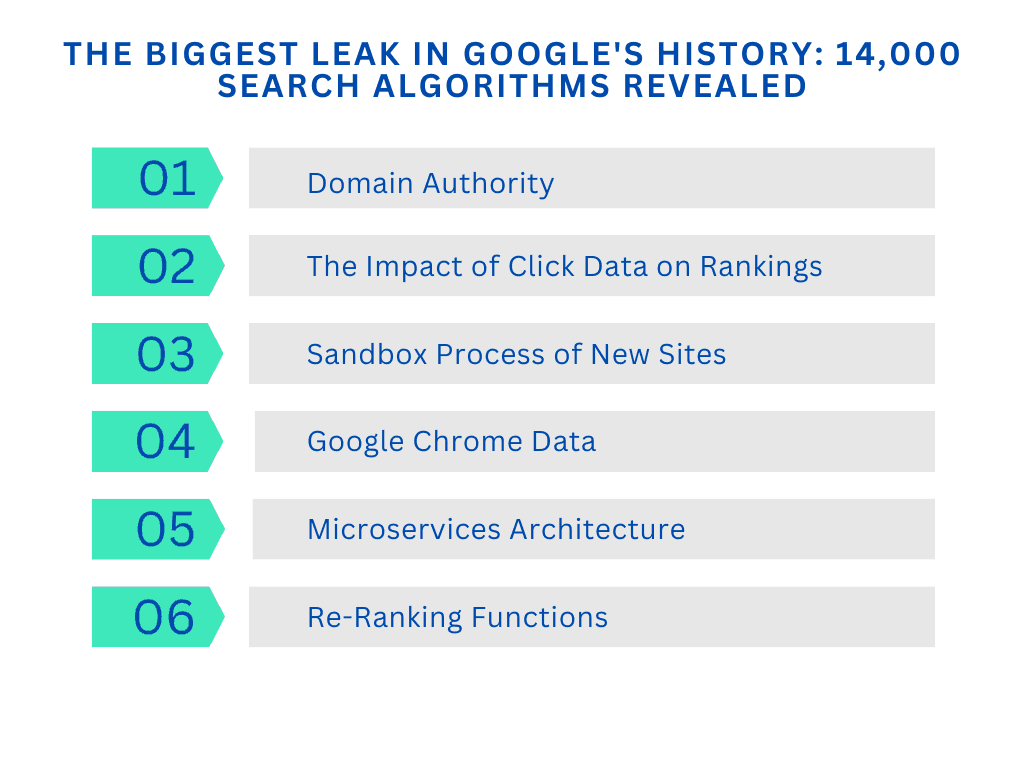
What was in the leak, and what wasn't?
The documents were a list of the data fields Google stores (protocol buffer definitions). Each field had a name and a short description. What they didn't include:
Which attributes are actually used in ranking
How the attributes are weighted against each other
The ranking algorithm itself or its code
So some conclusions drawn from the leak are facts and some are interpretation. The existence of a field shows that Google collects that data; it doesn't show how much it affects ranking.
The 7 most important things the leak revealed
1. Site-level authority is measured
Google representatives had long said they didn't use a "domain authority" score. The documents, however, include a field called siteAuthority among the quality signals. This isn't the same as a third-party metric like Moz's Domain Authority, but it shows that Google keeps a measure that assesses the site as a whole.
2. Click data is used
The documents mention a system called NavBoost and click fields such as goodClicks, badClicks and lastLongestClicks. NavBoost had also been confirmed by Google executives' testimony in the US Department of Justice antitrust case against Google. Whether a user clicks a result and stays on the page, or quickly returns to the search results, is among the signals that affect ranking.
3. Chrome data appears in quality signals
One of the modules related to page quality includes a field called chromeInTotal, which stores site-level Chrome views. Google had previously said it didn't use Chrome data in ranking.
4. There may be a waiting mechanism for new sites
The documents contain a field called hostAge and wording that points to a "sandbox" mechanism for new content. This may be a technical explanation for why new sites can't immediately rank highly for competitive searches.
5. There are "twiddler" functions that adjust rankings afterwards
Ranking isn't a single algorithm. According to the documents, after the initial ranking, functions called twiddlers reorder the results. NavBoost, freshness and quality adjustments work in this layer.
6. Author information is stored
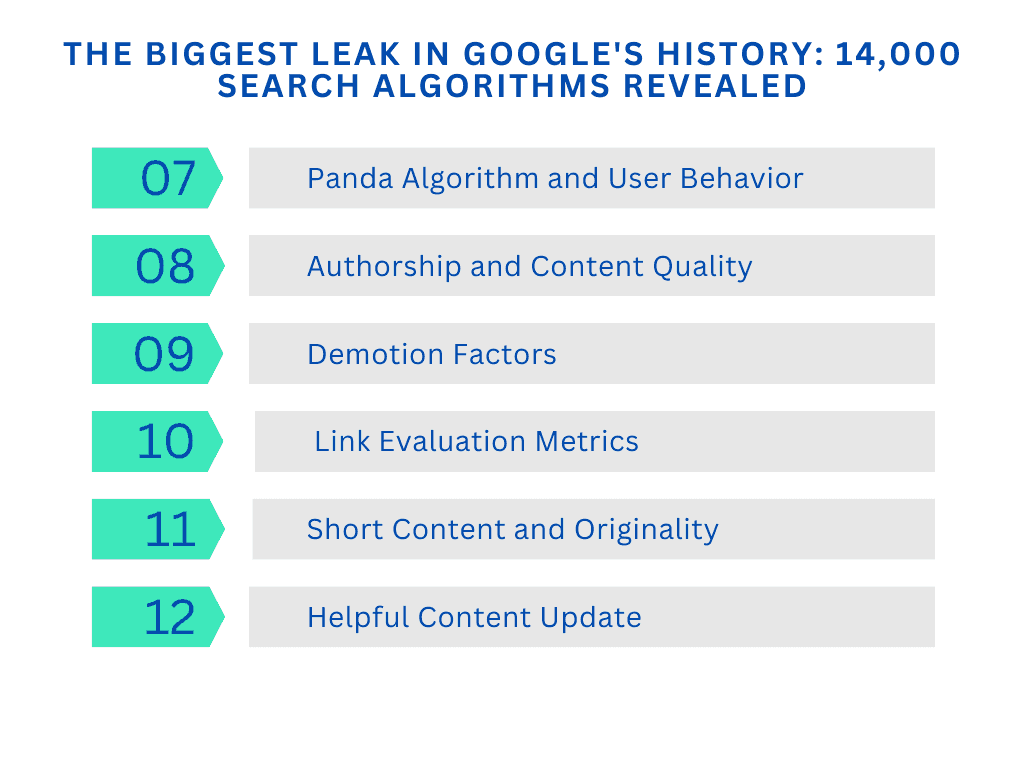
Google stores author information for documents as a separate field. This suggests that authorship and expertise signals (E-E-A-T) aren't just a guideline concept but have a counterpart in the system.
7. Demotion signals are defined
The documents contain various demotion fields: anchor text that doesn't match the target page, signals pointing to user dissatisfaction, exact match domains and product review content, among others. There are also fields suggesting that trusted sources are boosted on sensitive topics such as elections and COVID-19.
What isn't certain?
After the leak spread, many articles drew firm ranking rules from field names. Points to be careful about:
The documents may reflect a version that is at least a few years old. Some fields may no longer be used.
A field's name doesn't always describe accurately what it does.
No field's weight is known. Saying "Google uses X" is not the same as saying "X is decisive in ranking".
SEO lessons that still hold in 2026
Google's search experience has changed a lot since the leak: AI Overviews and AI Mode have become widespread. Still, the core principles the leak pointed to remain valid:
The quality of the whole site matters. Weak pages can drag down the site's overall assessment. That's why merging or removing low-quality or thin pages works.
Users finding what they're looking for matters. Pages that don't get clicked, or that are abandoned straight after the click, lose signals. The page has to deliver what its title and description promise.
Brand awareness feeds traffic. Users who search for your brand directly and visit your site contribute positively to the behavioural signals Google stores. SEO isn't separate from brand building.
Author and source information should be visible. Having real experts write content, and stating that clearly on the page, builds trust with both users and search engines. We explain how to mark up author and organisation information with structured data in our guide to schema markup.
New sites need patience. Rather than expecting immediate results for competitive searches with a new domain, it's more realistic to gain visibility first in less competitive, long-tail searches.
Freshness and date consistency matter. The date on the page, the date in the URL and the dates in structured data should be consistent with each other. Genuinely updating old content and showing the update date correctly is valuable in this respect.
Frequently asked questions
Did Google's 14,000 ranking factors leak?
No. The leaked documents defined 14,014 attributes (data fields). They don't say which of these are used in ranking or how much weight they carry.
Did Google confirm the leak?
Yes. On 29 May 2024 Google confirmed the documents were genuine, but warned that the information could be out of context, outdated or incomplete.
Should I change my SEO strategy after the leak?
The core principles haven't changed. If anything, the leak confirmed that strategies built on quality content, user satisfaction, a strong brand and authority are heading in the right direction. What should change is relying on shortcuts drawn from leak headlines.
Let's review your SEO strategy together
As the leak showed, ranking doesn't depend on a single factor; site quality, user behaviour and authority work together. If you'd like to review your store's or site's SEO and GEO, get in touch through our SEO and GEO consulting page.